
When my kids were young, I remember sitting down sometime in mid-November every year to plan Christmas-themed activities and lessons for December. My thinking was that we couldn’t stop our regular learning, so we had to cram all these extra “fun” lessons on top of everything else.
It took several stressful years for me to realize I was making things unnecessarily complicated. Instead, I should have followed my usual pattern of keeping learning simple, even through the Christmas season.
I’d forgotten that all of family life contains learning and lessons. We didn’t need Christmas-themed word finds, lessons about the history of Saint Nicholas, or an entire month’s worth of math problems rewritten to involve counting snowmen.
When we baked cookies together, held our annual gingerbread house decorating extravaganza, or acted out the Christmas nativity, we were already learning important lessons. And I’m not talking about the fractions in the cookie recipe.
It’s perfectly okay to keep plugging along with normal math, reading, and writing all through December. It’s great to stay on track with the history and science lessons you’ve already planned. There’s no need to cram more on top.
That doesn’t mean you can’t do some Christmas-themed math worksheets if you want to. But there’s absolutely no reason to spend hours preparing something that would normally be as simple as opening the book and getting started.
The Lessons We Were Already Learning
So what lessons were my children learning through our ordinary family Christmas traditions?
Christmas Cookies and Family Togetherness
Every year we baked and decorated Christmas cookies together. Yes, there was some practical cooking experience involved, but the more important lessons had very little to do with measuring ingredients.
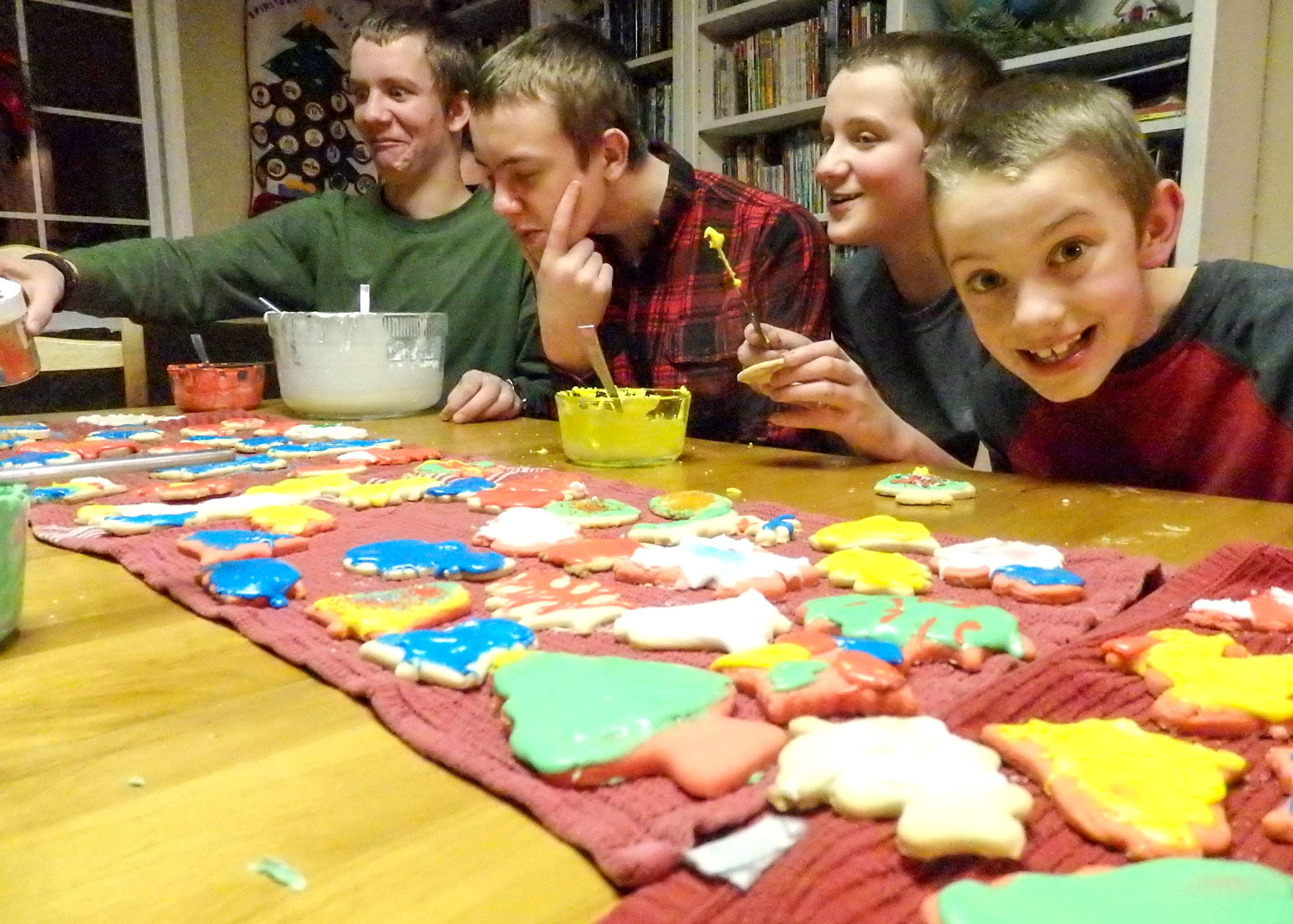
We learned to take turns, enjoy the process, and appreciate each other’s company. We developed our sense of humor, teased each other, and enjoyed the kind of family banter that happens when everyone is gathered around a table covered in cookies and frosting.
Those are lessons worth learning, and they didn’t require a lesson plan.
Gingerbread Houses and the Art of Failure
Our annual gingerbread house decorating extravaganza was another family tradition. We learned that different people have different talents and that it’s okay when things don’t turn out the way you imagined.
Sometimes the gingerbread houses collapsed. Sometimes the decorations were ridiculous. But the results were almost always sweet.
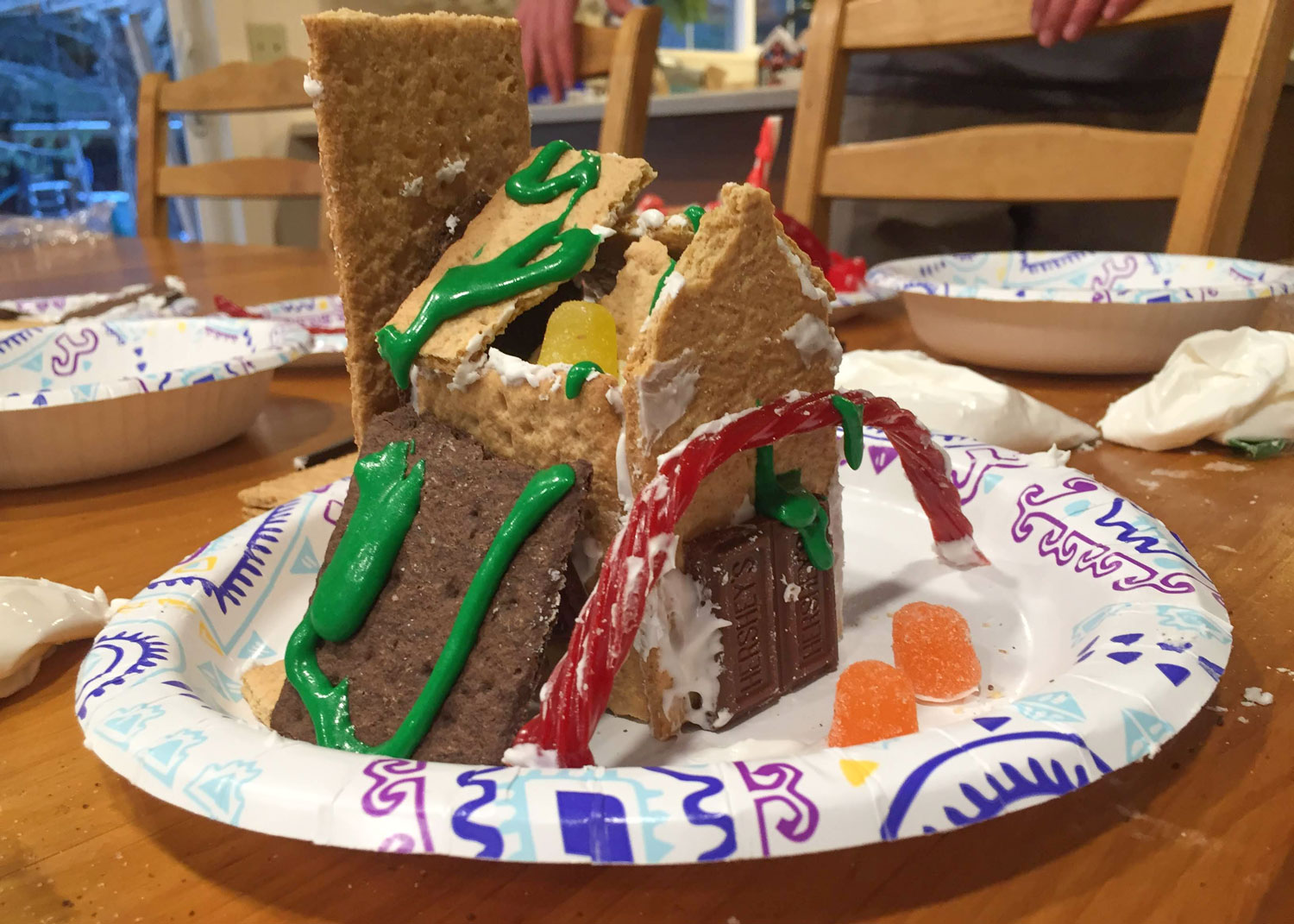
One year, we decided to bring some of our gingerbread houses to our church’s Christmas dinner, where they were holding a gingerbread house decorating contest.
That was the year we learned that some people take gingerbread house decorating very seriously.
We did not win.
But we had a wonderful time, and I think we learned something about enjoying an activity without needing to be the best at it.
The Christmas Nativity and Family Traditions
Every year our family acts out the Christmas nativity story. Karen and I have been doing this since we were little, so it’s a longstanding family tradition that we’ve passed on to our children.
The kids and I dressed up and played the parts. Since we were a house full of boys, I always played Mary. We never seemed to have a doll to play baby Jesus, so most years we used a stuffed bear instead.
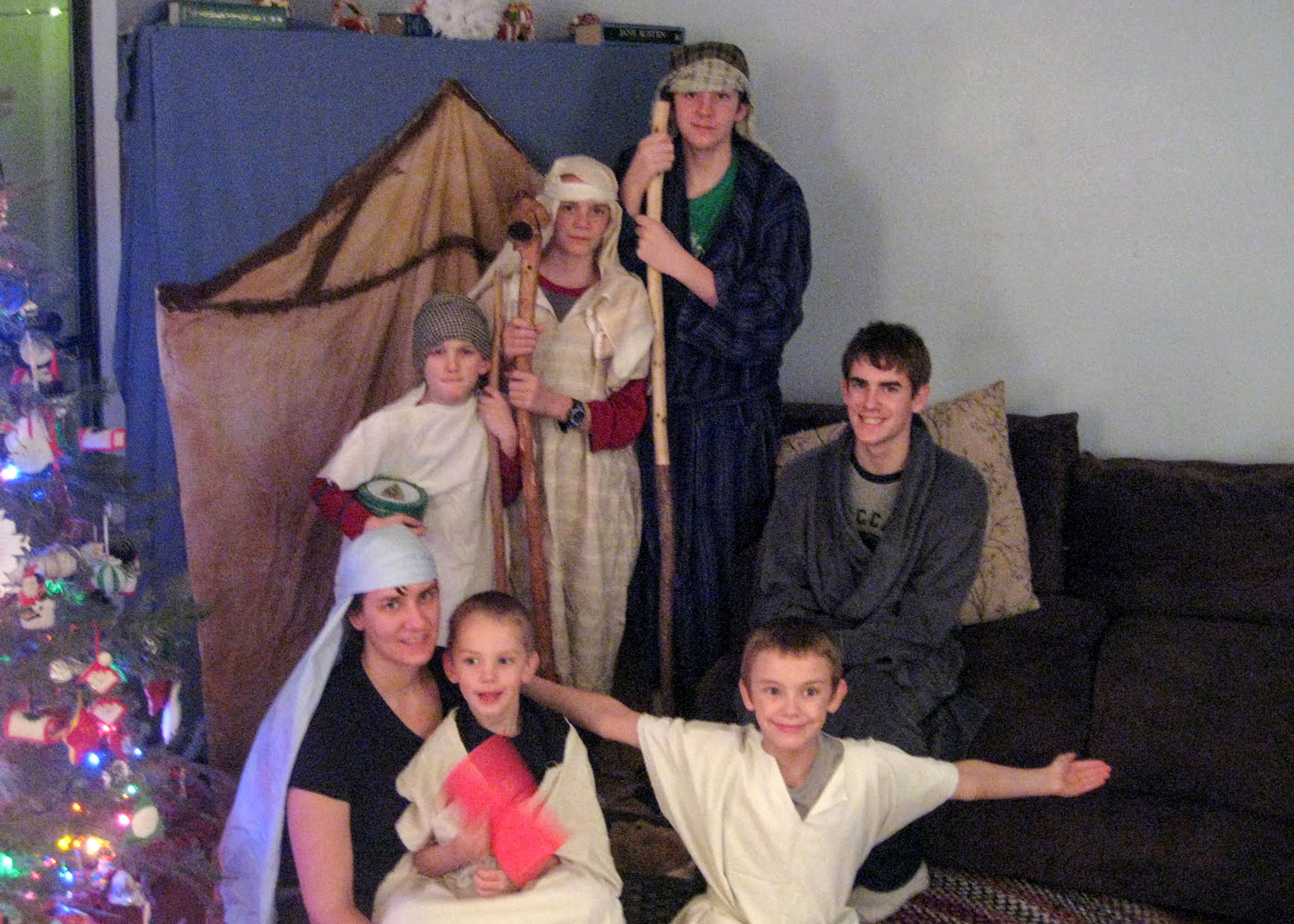
There was plenty of goofing off, and our productions were certainly never polished.
But through all the laughter, makeshift costumes, and stuffed-animal babies, my children learned the meaning behind Christmas. We passed on our religious traditions in a way that brought us closer together and was enjoyable instead of painfully boring.
And that is the kind of lesson I hope they carry with them into their own families.
Simple Ways to Bring Christmas Into Your Homeschool
Once I figured out how to slow down instead of turning homeschooling into a Christmas-themed marathon, I realized there were a few easy places where Christmas fit naturally into the homeschool rhythm we’d already developed.
These didn’t require elaborate plans or hours of preparation. They were just small adjustments to things we were already doing.
1. Choose Christmas Read-Alouds
The simplest change was to choose a Christmas-themed read-aloud.
I also devoted at least one read-aloud session during December to our collection of Christmas picture books.
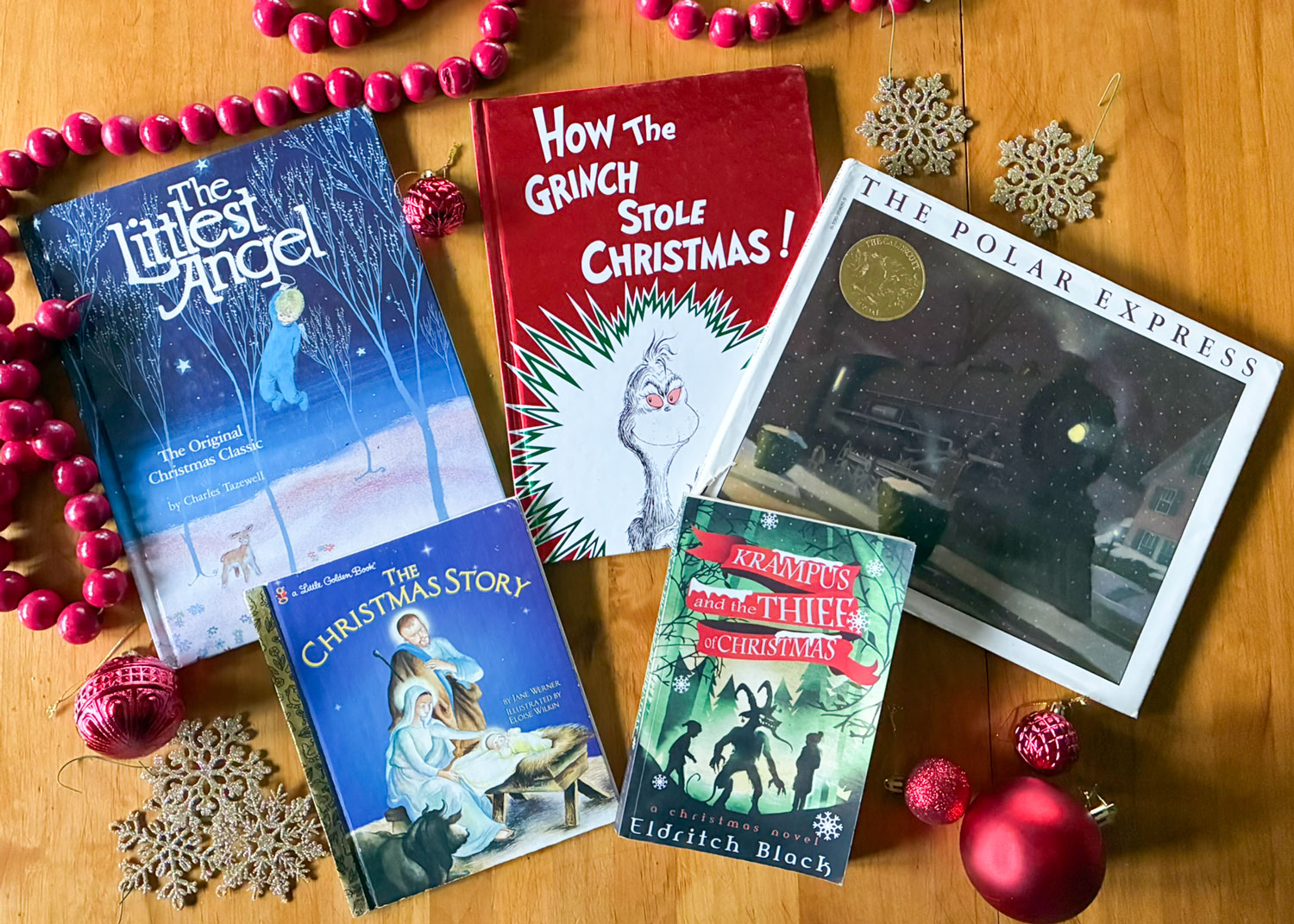
Because of the tradition and nostalgia, and because we only pulled those books out in December, even my older teenagers would gather around to listen alongside the younger kids.
As Amazon affiliates, the recommended books and products below kick back a tiny percentage of your purchase to us. It doesn’t affect your cost and it helps us run our website. We thank you!
I still can’t get through The Littlest Angel without crying.
We also read longer Christmas stories and novels, including Charles Dickens’s A Christmas Carol and Krampus and the Thief of Christmas by Eldritch Black.
Switching out our regular read-aloud for a Christmas story was an easy way to enjoy the season without adding another thing to the schedule.
2. Give an Ordinary Lesson a Christmas Twist
Sometimes a lesson we already had planned was easy to adapt to a Christmas theme without adding any extra work.
One year, we were studying Principles of Design from our Art Beginnings course. Instead of adding separate Christmas art projects, we simply applied the design principles we were already learning to Christmas-themed artwork. We were still studying balance, emphasis, pattern, and the other principles of design, but our projects had a seasonal twist. No extra lessons required!
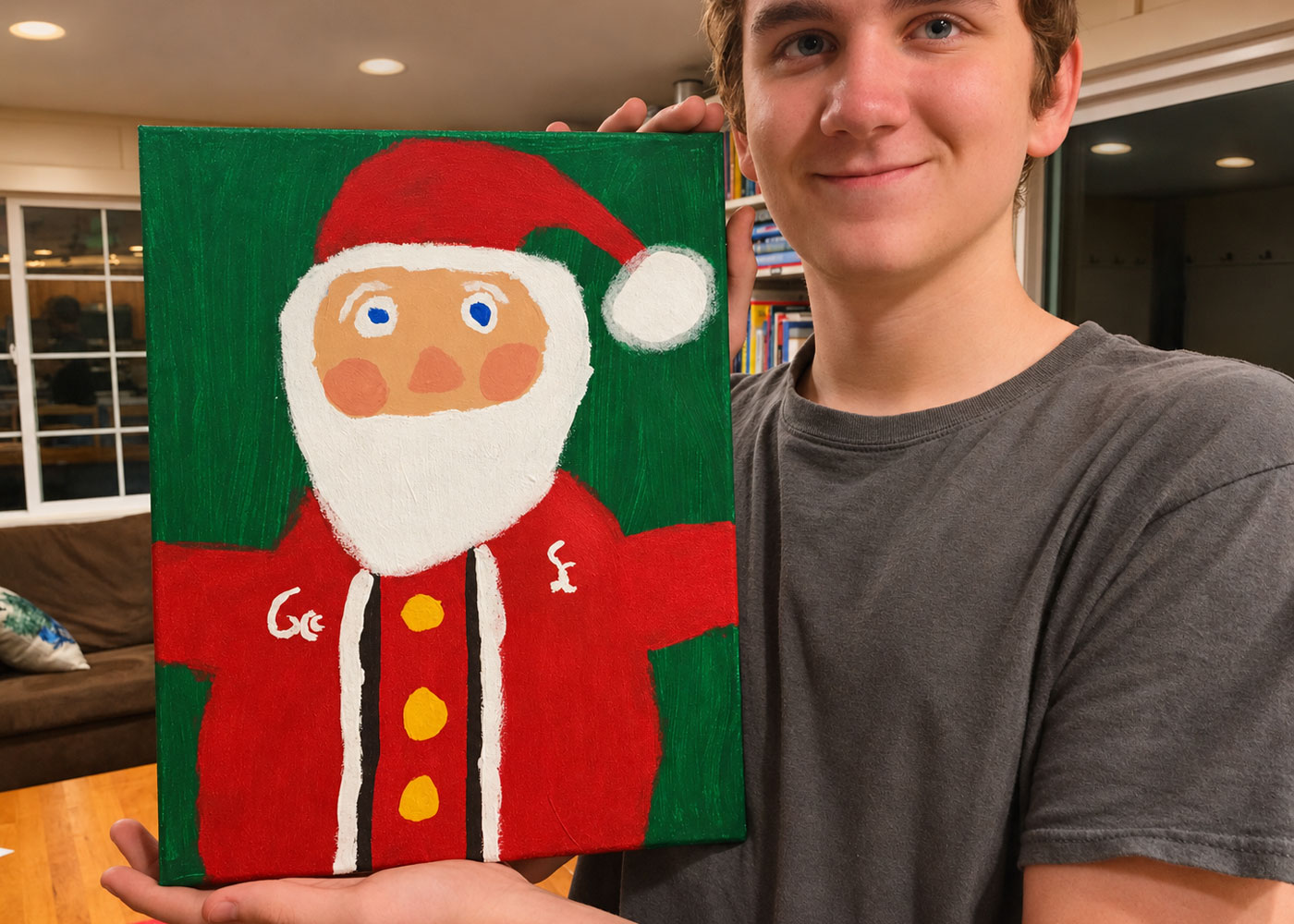
We still learned the principles of design. We simply applied them to something seasonal.
There’s a big difference between making a small seasonal adjustment to an existing lesson and planning an entirely new Christmas curriculum.
If a Christmas connection comes naturally, enjoy it. If it doesn’t, just keep going with the lesson you already planned.
3. Restock Your Morning Basket
If your family uses a morning basket, this might be the easiest way of all to bring Christmas into your homeschool.
On December first, swap out some of your usual materials for Christmas quotes, picture books, poems, artwork, and Christmas Mad Libs.
You don’t need a complicated schedule or a month of special activities. Just gather a few seasonal things and enjoy them during the morning routine you’ve already established.
It’s a simple way to make the season feel special without upsetting your plans or creating more work during an already busy month.
Keep the Learning Simple and Enjoy Christmas
Looking back, I wish I’d spent less time trying to make December educational and more time recognizing the education that was already happening.
There was value in the schoolwork we continued, of course. But there was also value in the laughter around the cookie table, the collapsing gingerbread houses, the Christmas stories, and our decidedly amateur nativity productions.
Those experiences taught my children things I couldn’t have taught from a worksheet.
So if you’re feeling pressure to make your homeschool extra special this Christmas, remember that you don’t have to.
Keep doing what works for your family. Add a little Christmas cheer where it fits naturally. Then give yourself permission to enjoy the traditions, the projects, and the people without worrying about how much educational value you can squeeze out of every moment.
Sometimes the best lessons are the ones we never planned.